

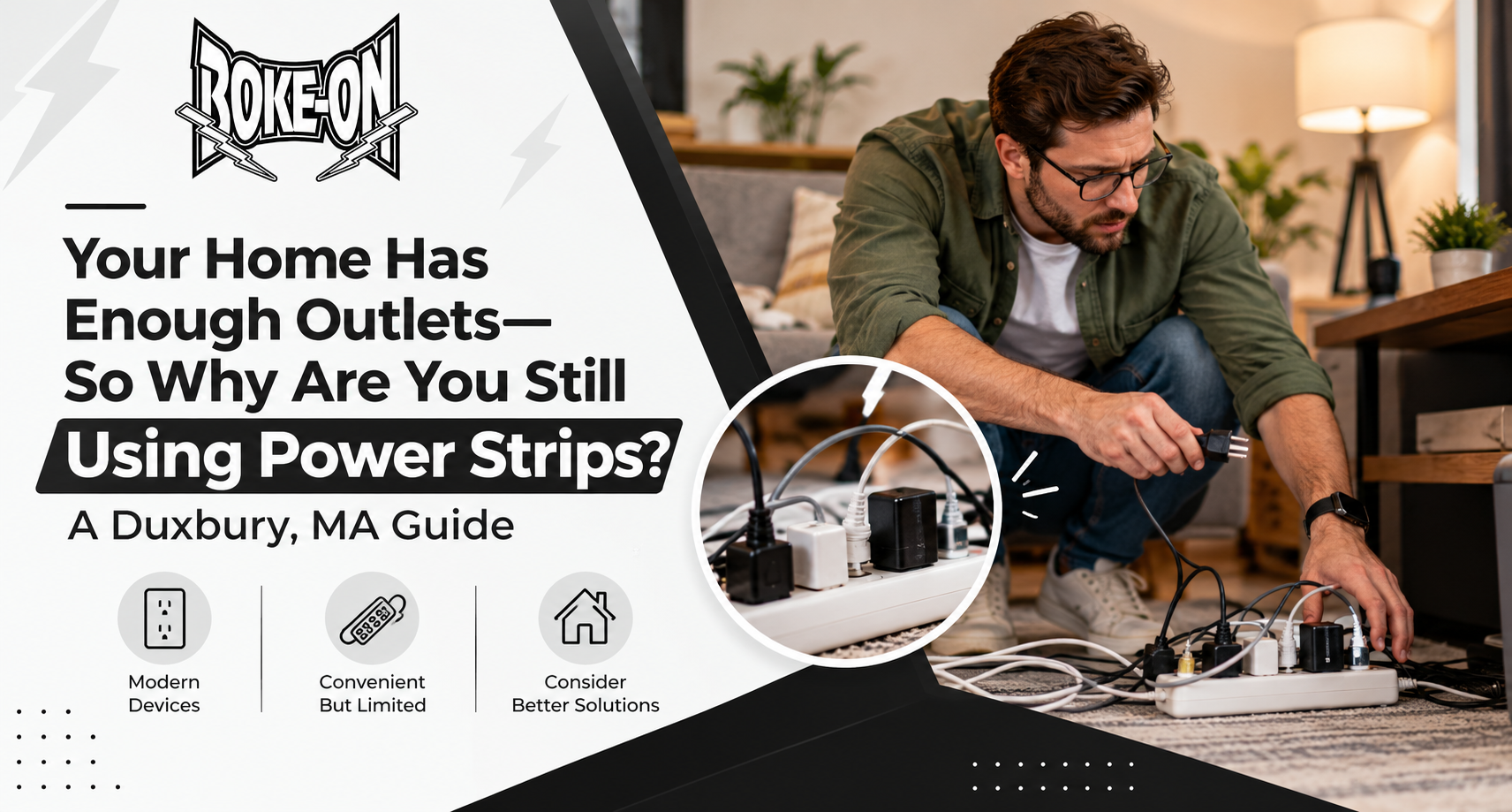
It can seem strange: your Duxbury, MA home has plenty of electrical outlets, yet power strips still seem to be everywhere. One sits behind the television, another is under the desk, and another may be tucked behind a kitchen counter.
Power strips can be useful for connecting several low-power devices in one location, but relying on them throughout the home may indicate that the electrical layout does not match the way you use the space today. Understanding why this happens can help homeowners use electricity more safely and recognize when additional outlets or electrical improvements may be worth considering.
Why Do Homeowners Use So Many Power Strips?
Modern homes have more electrical devices than they did years ago. Televisions, computers, monitors, chargers, lamps, printers, speakers, gaming systems, small appliances, and other electronics can quickly fill the available outlets.
Even a room with several wall outlets may have them positioned in places that are inconvenient for today’s furniture arrangement. A homeowner may therefore use a power strip simply because the nearest outlet is several feet away.
The issue is not that every power strip is unsafe. The concern comes when power strips are used as a permanent solution for a growing electrical demand.
More Devices Can Change How a Room Uses Electricity
Think about a typical home office. A single outlet may have originally been enough for a lamp and a computer. Today, that same workspace might include two monitors, a printer, speakers, chargers, a desk lamp, and other equipment.
The same thing happens in entertainment areas and bedrooms.
Before adding another power strip, look at what is actually connected. Some devices use very little electricity, while others require significantly more power. Knowing what each device needs is more useful than simply counting the number of plugs.
Power Strips Should Not Be Treated Like Extra Outlets
A power strip does not increase the amount of electricity a circuit can safely provide. It simply allows multiple devices to connect to the same electrical supply.
This distinction is important.
Plugging several devices into one strip does not mean the circuit can safely handle unlimited electrical demand. Overloading a circuit can cause a breaker to trip and, in some circumstances, create overheating and fire hazards.
Never connect one power strip to another to create more outlets. Also follow the power strip manufacturer’s instructions and electrical ratings.
If you repeatedly need multiple strips in one area, the better question may be whether the room needs a more suitable electrical layout.
Look at Where You Actually Need Outlets
Furniture placement can make a major difference.
You may technically have enough outlets, but they may all be located behind large furniture, far from a desk, or on the opposite side of the room from where devices are being used.
When renovating or changing a room, think about where people actually sit, work, cook, or use electronics.
For example, installing an exhaust fan may be part of a bathroom improvement, while adding a New Ceiling fan installation in Cedarville MA may improve comfort in another room. Electrical planning should consider the complete layout rather than treating each device as an isolated addition.
Some Appliances Should Not Share a Power Strip
High-power appliances require particular care. Space heaters, certain kitchen appliances, portable air conditioners, and other equipment can draw considerably more power than small electronics.
A power strip designed for computers and chargers should not automatically be treated as suitable for every appliance.
If you are unsure whether a particular appliance should be connected to a power strip, check the manufacturer’s instructions or consult a qualified electrician.
Could Your Home Need More Outlets?
If power strips have become a permanent part of several rooms, it may be worth considering whether additional properly installed outlets would make more sense.
An electrician can evaluate the existing wiring, circuits, outlet locations, and electrical demand before recommending changes. This is particularly important in older homes where electrical systems may not have been designed for today’s number of devices.
Boke-On Electric provides residential electrical services and can help homeowners evaluate electrical needs as part of home improvements and upgrades.
Don’t Forget Bathrooms and Ventilation
Bathrooms are another area where electrical planning matters. Modern bathrooms may include exhaust fans, lighting, outlets, heated features, and other equipment.
A properly installed Exhaust fan installation in Duxbury MA can help address ventilation needs, but electrical work in bathrooms requires appropriate consideration of moisture and applicable electrical requirements.
Homeowners should avoid using improvised extension-cord or power-strip arrangements in areas where water and electricity are close together.
What Are Some Signs Your Electrical Layout Needs Attention?
Pay attention to patterns rather than one isolated situation.
You may want to have the electrical system evaluated if you regularly experience:
- Breakers that trip repeatedly
- Warm or discolored outlets
- Flickering lights
- Frequent reliance on extension cords
- Multiple power strips in one room
- A lack of convenient outlets for normal household use
- Unusual buzzing or burning smells
These signs do not identify a specific electrical problem on their own, but they are reasons to avoid simply adding another power strip and ignoring the underlying issue.
Final Thoughts
Having enough outlets is not only about the number installed on the walls. Their location, the condition of the electrical system, and the way your household uses each room all matter.
Power strips can be convenient for appropriate low-power electronics, but they should not become a substitute for a properly planned electrical system. If you find yourself constantly adding strips, extension cords, or adapters, consider whether your home’s electrical layout needs to catch up with the way you live today.
For Duxbury homeowners, thoughtful electrical planning can make everyday spaces more convenient while helping ensure that new equipment and household technology are supported appropriately.